By Marcos Leal and Adriana Machado, KOMPASSIUM Partners
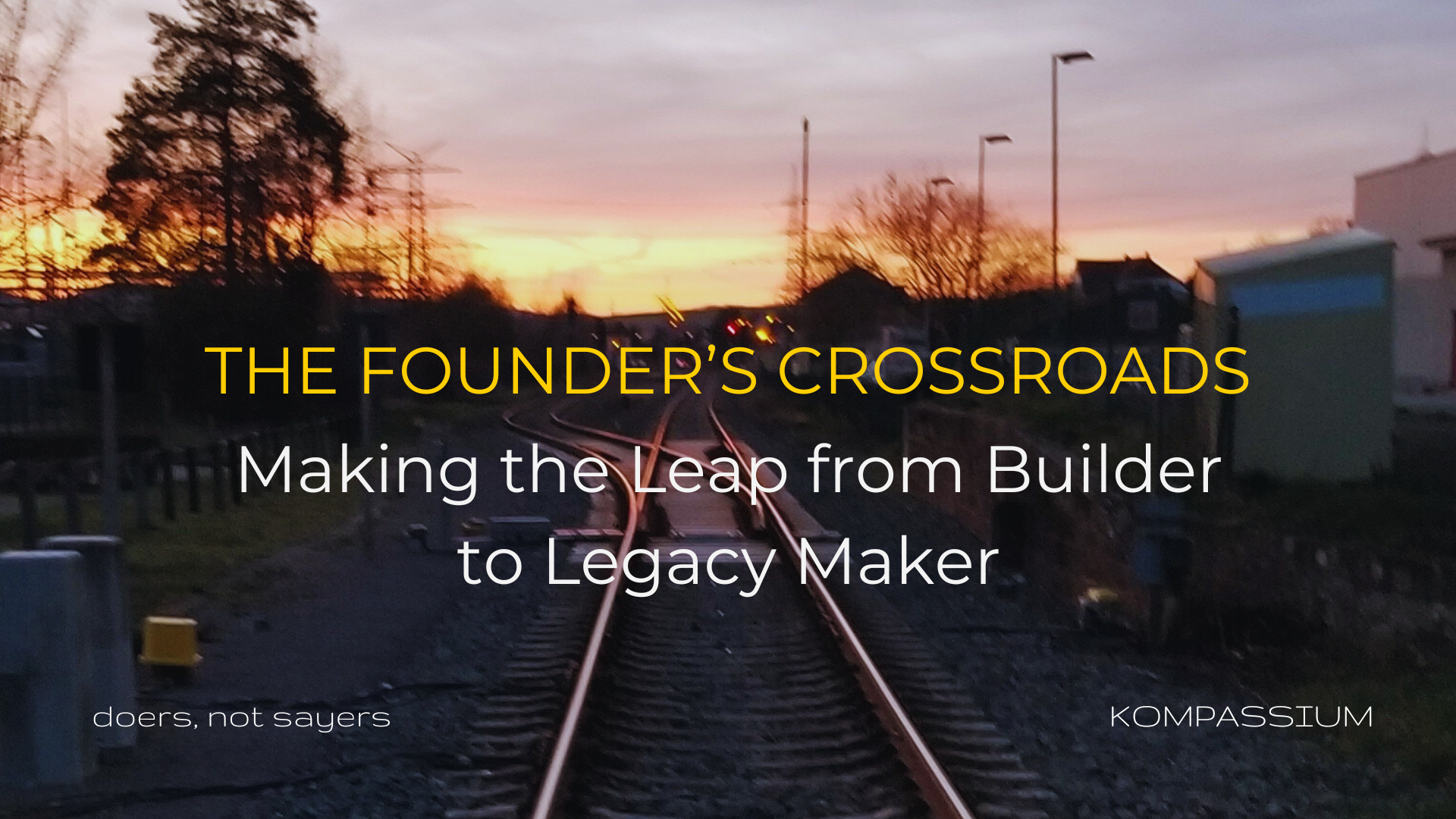
Making the Leap from Builder to Legacy Maker
If you are or have ever been a founder, have you faced or will soon face that pivotal moment when the path ahead forks: Continue building or pass the torch?
It’s more than a business decision—it’s about legacy, impact, and the future of everything you’ve built. The weight of this decision can feel overwhelming, but it’s also a celebration of your and your team’s success.
Whether you’re considering an acquisition, merger, or IPO (initial public offering), this isn’t just an exit—it’s an evolutionary process. Your company has reached a milestone that proves its value and validates your vision. Now comes the strategic challenge of maximizing that value and the impact on your team, on your and their lives, and on the legacy you are leaving behind while conserving the essence of what makes your organization unique.
Understanding the Psychological Journey
Before diving into the practical aspects, it’s crucial to acknowledge the emotional complexity of this decision. Many founders struggle with the idea of letting go, even partially. You’ve poured years of your life into building this company, developing its culture, and leading its people. You may have dreamt about generations of your family working and making your venture part of their lives. The prospect of change can trigger concerns about legacy, identity, and purpose.
This is normal. It’s a sign of effective leadership—you care deeply about your company’s future. The key is channeling these emotions into constructive decision-making. Think of this transition not as an ending but as a strategic movement that could amplify everything you’ve built. Just like the original seed was cared for to grow and bloom, it’s time to care for the organization’s health differently.
Leading Your Team Through the Evolutionary Process
Your team has been in the trenches with you, turning vision into reality. Their first questions will naturally focus on their future:
- How will my role evolve?
- What new opportunities will emerge?
- What will the company culture turn into?
- How may I remain relevant?
- What happens to ongoing projects and initiatives?
As a leader who’s navigated the journey from startup to scale-up, you can conduct this transition as a catalyst for healthy growth. When a company reaches this stage, it has proven its worth in the market. That’s not just success—it’s validation.
The Opportunity Narrative
For your team, this evolution can unlock unprecedented opportunities:
- Career advancement within a larger organization
- Access to enhanced resources and technologies
- Exposure to new markets and challenges
- Potential for international assignments
- Enhanced professional development programs
- Improved benefits and stability
- Opportunity to influence a larger organization
- Chance to be part of something bigger
Some team members may naturally assume leadership roles they’ve been preparing for. Some may feel too stretched and may require additional support. Others might find the inspiration to start their entrepreneurial journeys. The key is helping each person see and actively embrace their place in the self-organizing story.
Communication Strategy
Transparency is your compass here, but it needs to be strategic. Consider implementing a structured communication plan:
1. Initial Announcement
- Focus on the vision and opportunities
- Address immediate concerns about job security
- Outline the timeline for more detailed information
2. Department-Level Meetings
- Create safe spaces to discuss specific impacts on each team
- Allow for open Q&A sessions and engagement in problem-solving
- Address concerns and share concrete examples of how they could be turned into opportunities
3. Individual Level
- Empower team members with systems thinking skills
- Offer mentoring/coaching to leaders in critical roles
- Schedule regular one-on-one meetings with key team members
- Discuss expectations and potential career paths in light of role evolution
4. Rhythm
- Plan for weekly or bi-weekly communications
- Review progress on the transition with metrics that reflect the aspects to conserve
- Celebrate success by sharing stories and positive developments
Creating Alignment with Stakeholders
Your investors and partners aren’t just financial stakeholders but co-architects of your success story. Whether they’re venture capitalists who believed in your early vision or strategic partners who helped you scale, they’re invested in seeing your mission advance to its next chapter.
Strategic Considerations
Before engaging in any serious discussions about transitions, consider these critical questions:
1. Buyer/Partner Alignment
- Does their vision for the future align with yours?
- How do they typically handle acquisitions?
- What’s their track record with previous integrations?
- Do they value innovation, entrepreneurship, and impact?
2. Market Readiness
- Is this the optimal time for a transition?
- How will the market perceive different options?
- What’s the competitive landscape looking like?
- Are there upcoming market changes to consider?
3. Organizational Fit
- Will the cultures mesh well?
- How complementary are the operational styles?
- What synergies could be realized?
- What potential conflicts need to be addressed?
Stakeholder Management
Build trust through early engagement and structured dialogue:
1. Early-Stage Investors
- Review original investment theses
- Discuss alignment with exit timelines
- Explore various liquidity options
2. Strategic Partners
- Assess the impact on existing partnerships
- Identify opportunities for expanded collaboration
- Plan for a smooth transition of joint projects
3. Board Members
- Leverage their experience and networks
- Seek guidance on timing and approach
- Strengthen governance to build consensus on key decisions
Preparing for the Next Chapter
Success in this transition requires more than financial preparation—it demands operational excellence and strategic foresight. Focus on these key areas:
1. Value Recognition & Performance Metrics
Move beyond traditional valuations. Create a comprehensive scorecard that captures:
Financial Metrics
- Revenue growth and profitability
- Customer acquisition costs
- Lifetime value metrics
- Cash flow efficiency
Operational Excellence
- Process automation and efficiency
- Quality metricsInnovation pipeline
- Operational scalability
Market Position
- Brand strength
- Market share trends
- Competitive advantages
- Geographic expansion potential
Team Capabilities
- Leadership bench strength
- Technical expertise
- Innovation capacity
- Cultural cohesion
2. Maintaining Momentum
Keep your growth engine running at full throttle during the transition:
- Set clear quarterly objectives
- Maintain regular business reviews
- Accelerate key strategic initiatives
- Keep the sales pipeline strong
- Continue product development
- Conserve customer focus
- Nurture team motivation
3. Change Leadership
Transform uncertainty into opportunity through:
- Map the informal influencers within the organization
- Clear vision communication
- Regular progress updates
- Open feedback channels
- Success celebration
- Challenge addressing
- Future state mapping
- Team empowerment
4. Governance Evolution
Strengthen your organizational foundation through:
- Enhanced financial controls
- Robust board structures
- Streamlined reporting systems
- Improved risk management
- Clearer decision rights
- Appropriate documentation
- Stronger compliance
5. Strategic Partnership Selection
Choose transition partners who bring:
- Relevant industry (or multi-industry) experience
- Cultural sensitivity
- Technical expertise
- Strategic vision
- Operational excellence
- Change management skills
- Global perspective
From Theory to Action: The KOMPASSIUM Approach
Navigating the founder’s crossroads isn’t just about making the right decision—it’s about implementing it effectively. This is where our global network of experienced leaders becomes a vital asset to founding teams.
At KOMPASSIUM, we understand that founders need more than theoretical advice—they need practical guidance from executives who have walked this path before. Our network brings together over 700 years of combined leadership experience across diverse industries and markets, providing not just wisdom but actionable frameworks that bridge the gap between elite expertise and straightforward strategic execution. Our partnership with the Briyah Institute is a critical element in supporting our clients throughout this journey in a systemic way.
Our unique Advisory Programs are specifically designed to guide companies through transformative journeys like yours. Unlike traditional consulting approaches, we work with small cohorts of carefully selected companies facing similar challenges, allowing for both personalized attention and valuable peer learning.
The transition journey includes:
- Celebrating past success while preparing for future growth
- Identifying scale-up opportunities that align with your vision
- Strengthening governance structures that conserve your legacy
- Driving the transformation of broader teams involved in the process
- Developing succession plans that ensure continuity
- Connecting each company to an exclusive community of founders and executives
As doers, not sayers, we remain engaged throughout the implementation process, ensuring that plans become a reality and your legacy continues to flourish.
The founder’s crossroads may be challenging, but with the proper guidance and practical support, it can become the launching pad for your company’s next chapter of success—and your evolution as a business leader.
Marcos Leal is the managing partner, and Adriana Machado is the lead advisor at KOMPASSIUM, a global network of experienced leaders committed to business transformation and sustainable growth. Adriana is also the founder and managing partner of the Briyah Institute.